
How to Brush Your Teeth: Step-by-Step Guide
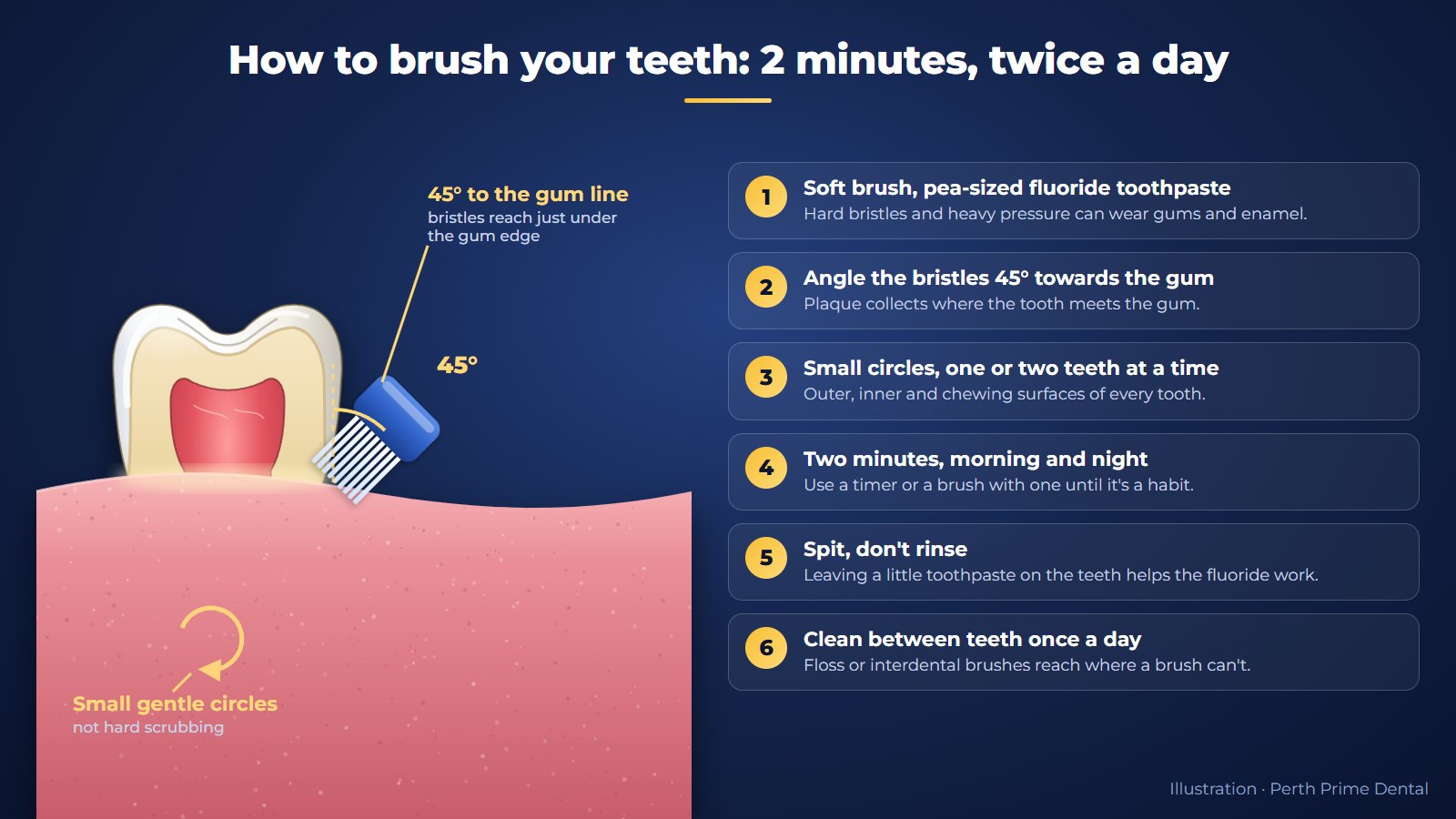
In short: Here’s how to brush your teeth properly: use a soft toothbrush and a pea-sized amount of fluoride toothpaste, angle the bristles at 45° towards the gum line, and brush in small gentle circles for two minutes, twice a day. Spit out the toothpaste but don’t rinse, and clean between your teeth once a day with floss or interdental brushes.
How to brush your teeth, step by step
- Choose a soft brush. Soft bristles clean well without wearing away gums or enamel. Medium and hard brushes, or scrubbing hard, can make gums recede over time.
- Use a pea-sized amount of fluoride toothpaste. Fluoride strengthens enamel and helps prevent decay.
- Angle the bristles at 45° towards the gum line. Plaque builds up where the tooth meets the gum, so that’s where the bristles need to reach.
- Brush in small, gentle circles, one or two teeth at a time. Cover the outer, inner and chewing surfaces of every tooth, and don’t forget the back teeth.
- Brush for two minutes. Most people stop well short of this. A timer, or an electric toothbrush with a built-in timer, helps.
- Brush your tongue gently to remove bacteria that can cause bad breath.
- Spit, don’t rinse. Leaving a thin layer of toothpaste on your teeth gives the fluoride more time to work.
How often should you brush your teeth?
Twice a day: in the morning and last thing at night. The night-time brush matters most, because saliva flow drops while you sleep and your teeth are less protected. The Australian Dental Association recommends brushing twice a day with fluoride toothpaste and cleaning between your teeth every day.
After acidic food or drinks, such as soft drinks, juice, wine or citrus, rinse with water and wait a while before brushing. Acid softens enamel for a short time, and brushing straight away can wear it.
Cleaning between your teeth
A toothbrush can’t reach the tight spaces between teeth, where decay and gum disease often start. Once a day, use floss, interdental brushes or a water flosser. Interdental brushes are often easier if you have larger gaps, a bridge or dental implants. Ask us to show you the right size at your next visit.
Manual or electric toothbrush?
Both work well when used properly. An electric toothbrush can make it easier to brush for the full two minutes, and some have pressure sensors that warn you if you’re pressing too hard. If you use a manual brush, the technique above matters more. Replace your brush, or brush head, every three months, or sooner if the bristles are splayed.
Brushing children’s teeth
| Age | What to use |
|---|---|
| First teeth to 18 months | A soft infant brush with water only, unless your dentist advises toothpaste |
| 18 months to 5 years | A small pea-sized amount of low-fluoride children’s toothpaste |
| 6 years and over | A pea-sized amount of regular fluoride toothpaste |
Children need an adult to brush their teeth, or to check their brushing, until they’re about 8. Teach them to spit out the toothpaste rather than swallow it.
Common brushing mistakes
- Brushing too hard. Pressure doesn’t clean better and can wear gums and enamel.
- Rushing. A quick brush leaves plaque behind, especially at the back.
- Missing the gum line and the inside surfaces of the lower front teeth, where tartar builds up fastest.
- Rinsing straight after brushing, which washes the fluoride away.
- Using an old, splayed brush.
Want to build better habits? Try our dental resolutions for healthier teeth.
When to see a dentist
Book a check-up if your gums bleed when you brush or floss, if they look red or swollen, if you have ongoing bad breath, or if your teeth feel sensitive. These are often early signs of gum disease, which is easier to treat early. Regular check-ups and cleans remove tartar that brushing can’t, and we’ll show you where your brushing is missing.
New to Perth Prime Dental? Your first check-up is capped at $250. We’re in London Court, 1/58 St Georges Terrace, Perth CBD.
Book a check-up Call (08) 9325 4175
Frequently asked questions
How long should you brush your teeth for?
Two minutes, twice a day. Split your mouth into four sections and spend about 30 seconds on each.
Should I brush before or after breakfast?
Either works. If you have acidic food or drinks at breakfast, such as juice, brushing beforehand avoids brushing softened enamel. Otherwise, rinse with water and wait a while after eating.
Is it bad if my gums bleed when I brush?
Bleeding gums are a common sign of gum inflammation, usually from plaque at the gum line. Keep brushing gently, clean between your teeth daily, and book a check-up if it doesn’t settle within a week or two.
How often should I replace my toothbrush?
Every three months, or sooner if the bristles are splayed or after you’ve been unwell.
General information only. For advice about your own teeth, ask your dentist.
